New Zealand’s retirement system is simple: NZ Super provides a government-funded base income from age 65 for eligible people, while KiwiSaver helps build personal savings.
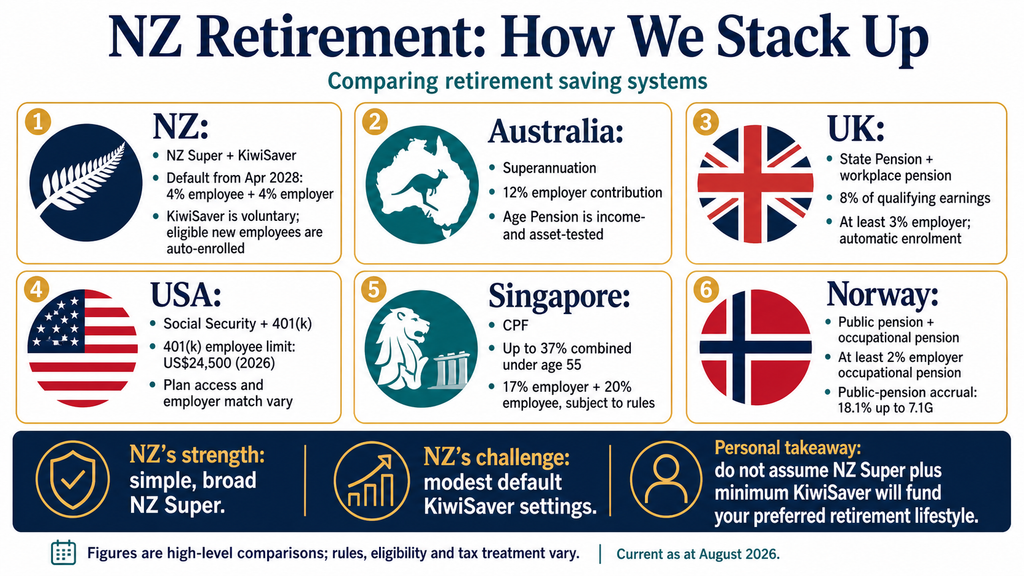
The infographic shows that other countries often require higher retirement contributions. That can mean more money is saved over a working lifetime—but usually with more rules, complexity and less flexibility.
NZ’s strengths
The key challenge
Minimum KiwiSaver contributions may not be enough to fund the retirement lifestyle many people want.
Australia requires employers to contribute 12% to superannuation. Singapore’s compulsory combined contributions can be much higher. These systems are not directly comparable with New Zealand’s, but they highlight the importance of consistently saving over time.
NZ Super and the future
NZ Super remains an important part of retirement income for many New Zealanders. However, it is funded largely from current tax revenue, and its cost will rise as more people retire and relatively fewer people are working and paying tax.
Treasury’s long-term modelling highlights the demographic challenge: there were around seven working-age people for every person aged over 65 in the 1960s, about four today, and potentially around two by 2065.
This does not mean NZ Super is about to disappear. However, future governments may need to consider changes to eligibility age, payment settings, taxes or other policies to help keep the system affordable.
What this means for you
Think of NZ Super as a starting point—not a complete retirement plan.
Your future outcome will depend on factors such as:
A regular review of your KiwiSaver settings and wider retirement plan can help ensure your savings are working toward your own goals.