KiwiSaver is becoming a key election issue, with parties taking very different approaches to how New Zealanders save for retirement.
The main questions are simple: should KiwiSaver become compulsory, how much should workers and employers contribute, and should Government provide extra support?
National proposes compulsory KiwiSaver from 1 July 2028, with default employee and employer contributions rising to 6% each by 2032. Its package also includes a proposed $1,500 Baby Boost and KiwiSaver contributions during paid parental leave.
NZ First goes further, proposing compulsory KiwiSaver enrolment at birth for New Zealand citizens, alongside a one-off $1,000 Crown contribution. Its workforce policy would also make KiwiSaver compulsory, with employee and employer contribution rates increasing to 8% initially and eventually 10% each.
TOP’s previously published KiwiSaver 2.0 proposal also supports compulsory saving, with contributions rising over time to 6% each.
By contrast, Labour, the Green Party and Te Pāti Māori have not identified comparable compulsory-contribution proposals in the material reviewed. Labour’s proposed capital-gains tax would exempt KiwiSaver. ACT has not announced a compulsory expansion, although David Seymour has floated a $500 investment-account idea for Year 11 students—not yet formal ACT policy.
From 1 April 2026, the default employee rate and minimum matching employer rate are generally 3.5%. Eligible members can receive up to $260.72 a year from Government, subject to the income, age and residence rules.
The policy trade-off is clear: higher compulsory contributions can build stronger retirement savings over time, but they also reduce take-home pay today.
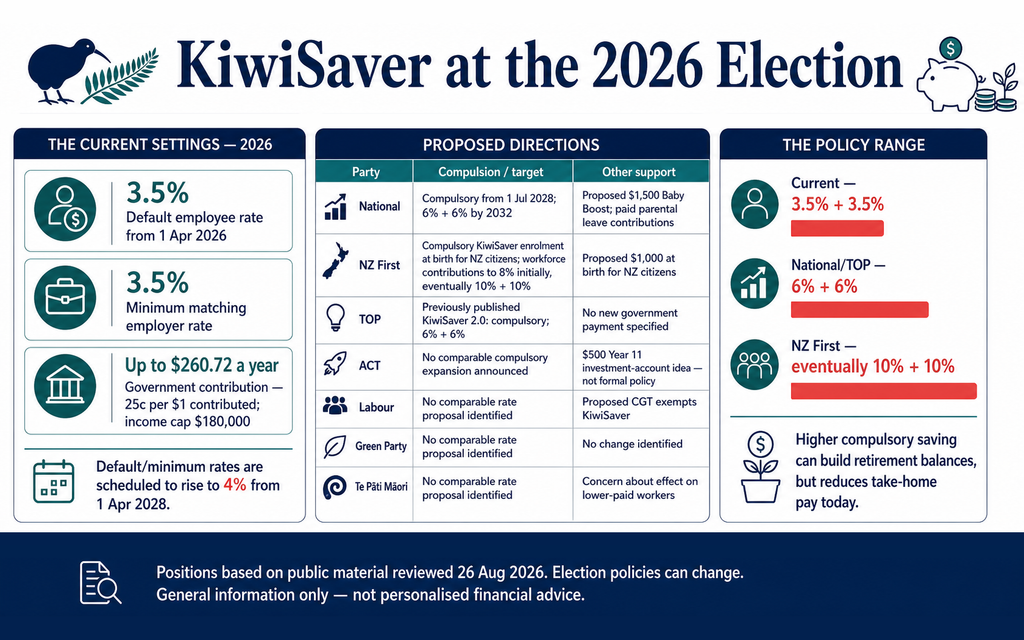
Policy positions reflect publicly available material reviewed on 26 August 2026 and may change during the election campaign.